
Nordic Chicken with Creamy Mustard and Dill Sauce
Some of my favorite suppers begin with a packet of chicken thighs and the contents of the refrigerator.
A little cream, a spoonful of mustard, perhaps some fresh herbs tucked into the vegetable drawer. Nothing particularly extravagant.
Yet with a hot skillet and a little attention, those ordinary ingredients can become a supper worth sitting down for. This Nordic-inspired chicken is one of those dishes.
I season boneless chicken thighs with sweet paprika, coriander, salt and black pepper, then leave them in the refrigerator for a few hours. It is a small step, but one that makes the meat noticeably more flavorful.
When the time comes to cook, I brown the chicken in a heavy skillet until the edges turn golden and the kitchen begins to smell rather wonderful. The chicken comes out of the pan, leaving behind those delicious browned juices.
Into the same skillet go finely chopped shallots and garlic, followed by a splash of dry white wine. A wooden spoon releases the savory bits from the bottom of the pan, carrying their flavor into the sauce.
Then comes chicken stock, a spoonful of Dijon mustard, a little wholegrain mustard and enough cream to bring everything together. I add just a teaspoon of honey, not to make the sauce sweet, but to soften the sharpness of the mustard.
The chicken returns to the skillet and finishes cooking gently in the sauce until tender. Fresh dill goes in toward the end, along with a little lemon zest and just enough lemon juice to brighten everything.
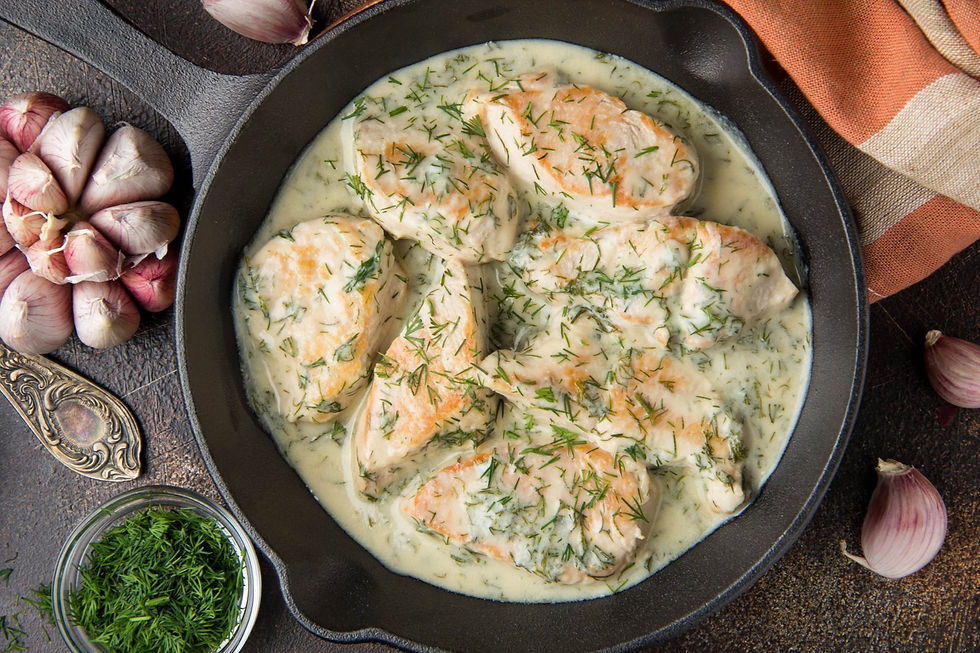
The finished sauce is silky and fragrant, with the gentle warmth of mustard and the freshness of dill.
And because a good sauce deserves something equally good beneath it, I serve the chicken over buttery caramelized onion rice. The onions are cooked slowly until sweet and lightly golden. The rice is then stirred through the butter, allowed to become fragrant, and cooked in chicken stock with a bay leaf. A final spoonful of butter and some fresh chives make the rice delicious in its own right.
I spoon a little into a warm bowl, settle the chicken on top and let the mustard and dill sauce find its way between the grains.
It is comforting without being heavy, rich without being overwhelming, and just the sort of supper I would happily make when friends come round. Although I might put a little extra sauce on the table. Someone always asks for more.
TIME About 1 hour 20 minutes, plus seasoning | SERVES 6 | LEVEL Easy |
BEFORE YOU START This whole dish is built on a well-browned chicken and a good pan sauce, and these lessons from my Kitchen School will help. Each one takes about five minutes to read. |
Why You'll Love It
TENDER, GOLDEN THIGHS Seasoned ahead and browned for real depth of flavor | TWO-MUSTARD SAUCE Smooth Dijon and wholegrain, softened with cream |
FRESH DILL AND LEMON Added at the end so the sauce stays bright | CARAMELIZED ONION RICE Buttery, fragrant and cooked in chicken stock |
As seen on TODAY and The Tonight Show · Parade magazine's chef for 10 years · About Chef Jon → |
Nordic Chicken with Creamy Mustard and Dill Sauce and Buttery Caramelized Onion Rice
Serves 6 | Prep: 30 minutes, plus 1 to 4 hours seasoning | Cook: about 50 minutes | Total: about 1 hour 20 minutes, plus seasoning
Ingredients
For the Chicken
2 pounds boneless, skinless chicken thighs
1½ teaspoons Diamond Crystal kosher salt, or about ¾ teaspoon fine salt
1 teaspoon freshly ground black pepper
1 teaspoon sweet paprika
½ teaspoon ground coriander
2 tablespoons vegetable oil
1 tablespoon unsalted butter
For the Creamy Mustard and Dill Sauce
2 medium shallots, finely chopped
2 garlic cloves, finely minced
½ cup dry white wine
1 cup good-quality, low-sodium chicken stock
1 tablespoon Dijon mustard
2 teaspoons wholegrain mustard
¾ cup heavy cream
1 teaspoon honey
3 tablespoons finely chopped fresh dill, plus a little for garnish
1 teaspoon finely grated lemon zest
1 to 2 teaspoons fresh lemon juice
1 tablespoon cold unsalted butter
Kosher salt and freshly ground black pepper
For the Buttery Caramelized Onion Rice
1½ cups long-grain white rice
2 tablespoons unsalted butter
1 tablespoon olive oil
1 large yellow onion, finely chopped
1 small garlic clove, finely minced
2¼ cups low-sodium chicken stock, or the amount appropriate for the rice being used
1 bay leaf
½ teaspoon kosher salt, or to taste
1 tablespoon unsalted butter, to finish
2 tablespoons finely chopped fresh chives
Freshly ground black pepper
Instructions
STEP 1 OF 12
Season the Chicken Ahead
Pat the chicken thighs thoroughly dry with paper towels. Combine the salt, black pepper, paprika and ground coriander in a small bowl.
Season the chicken evenly on both sides. Arrange the thighs on a tray, cover and refrigerate for at least 1 hour, and preferably up to 4 hours. This gives the seasoning time to penetrate the meat.
Chef Jon's tip: plan your timing. The rice onions need a slow 12 to 15 minutes, so you can start them in a separate pan while the chicken browns and have everything ready together. |
STEP 2 OF 12
Brown the Chicken in Batches
Take the chicken out of the refrigerator about 15 minutes before cooking. Pat away any excess surface moisture without removing the seasoning.
Heat the vegetable oil in a large heavy skillet over medium-high heat. Add half the chicken thighs, leaving space between the pieces.
Cook for 4 to 5 minutes on the first side, without moving them unnecessarily, until deeply golden. Turn and cook for another 3 minutes. Transfer to a plate. Repeat with the remaining chicken. The chicken will finish cooking in the sauce.
Chef Jon's tip: leave the thighs alone. If one won't lift away from the pan, it isn't ready. Give it another minute and it will release on its own. |
If something's off: if the chicken is sitting in liquid and looking pale, the pan is too crowded or not hot enough. Cook fewer pieces at a time. |
STEP 3 OF 12
Soften the Shallots and Garlic
Reduce the heat to medium. Pour off any excess fat, leaving about 1 tablespoon in the skillet. Add 1 tablespoon of butter.
Add the chopped shallots and cook for 3 to 4 minutes, stirring occasionally, until softened and lightly golden.
Add the garlic and cook for about 30 seconds, until fragrant.
You'll know it's right when the shallots are soft and lightly golden, and the garlic smells sweet rather than sharp. |
STEP 4 OF 12
Deglaze with White Wine
Pour in the white wine. Stir thoroughly, scraping the bottom of the skillet to release the browned chicken juices.
Simmer the wine until reduced by about half. The sharp smell of raw wine should soften, leaving a pleasantly fragrant liquid.
Chef Jon's tip: a wooden spoon is the best tool here. Scrape every bit of brown from the bottom of the pan. That's where the flavor is. |
STEP 5 OF 12
Build the Mustard Cream Sauce
Add the chicken stock and bring to a gentle simmer. Cook for 4 to 5 minutes, letting the stock reduce slightly and develop flavor.
Whisk in the Dijon mustard, wholegrain mustard, cream and honey. Bring the sauce to a gentle simmer.
If something's off: if the sauce starts to bubble hard, turn the heat down. A gentle simmer keeps the cream smooth. |
STEP 6 OF 12
Simmer the Chicken in the Sauce
Return the chicken thighs and any accumulated juices to the skillet. Reduce the heat to medium-low and cook gently for 8 to 12 minutes, turning the chicken occasionally, until the thickest pieces reach an internal temperature of at least 165°F.
Transfer the chicken to a clean plate. If the sauce seems thin, simmer it uncovered for another 2 to 3 minutes. It should lightly coat the back of a spoon without becoming thick or pasty.
You'll know it's right when an instant-read thermometer in the thickest piece reads at least 165°F, and the sauce lightly coats the back of a spoon. |
If something's off: if the sauce has thickened too much, whisk in a splash of hot chicken stock until it loosens. |
STEP 7 OF 12
Finish with Butter, Dill and Lemon
Reduce the heat to low. Stir in the cold butter, followed by the chopped fresh dill and lemon zest.
Add 1 teaspoon of lemon juice. Taste the sauce, and add a little more only if it needs more brightness.
Check the seasoning with kosher salt and freshly ground black pepper. The finished sauce should taste savory and gently sharp, with a noticeable freshness from the dill.
Return the chicken to the sauce and warm it gently. Avoid boiling the sauce vigorously after adding the fresh dill.
Chef Jon's tip: add the lemon a little at a time and taste as you go. The wine and mustard already bring acidity, so you may not need it all. |
You'll know it's right when the sauce tastes savory and gently sharp, with a clear, fresh note of dill. |
STEP 8 OF 12
Cook the Onions for the Rice
For the rice, rinse the rice briefly in cold water until the water runs less cloudy. Drain thoroughly.
Heat 2 tablespoons of butter and the olive oil in a medium saucepan over medium-low heat.
Add the chopped onion and a small pinch of salt. Cook slowly for 12 to 15 minutes, stirring occasionally, until the onion is soft, sweet and lightly golden. Do not let it burn.
If something's off: if the onions are browning quickly or catching at the edges, turn the heat down and add a tablespoon of water. Slow and sweet is the goal. |
STEP 9 OF 12
Toast the Rice
Add the minced garlic and cook for about 30 seconds.
Add the drained rice and stir gently for 2 minutes to coat the grains with the butter and onions. The rice should become fragrant and slightly translucent around the edges.
You'll know it's right when the grains look glossy and slightly translucent at the edges, and the kitchen smells faintly nutty. |
STEP 10 OF 12
Simmer and Rest the Rice
Add the chicken stock, bay leaf and salt. Stir once and bring to a gentle simmer.
Cover the saucepan tightly, reduce the heat to low and cook for about 15 minutes, or according to the instructions on the rice package, until the liquid has been absorbed.
Remove the saucepan from the heat without lifting the lid. Let the rice rest, covered, for 10 minutes.
Chef Jon's tip: resist lifting the lid. The steam trapped inside is doing the cooking, and every peek lets some of it escape. |
STEP 11 OF 12
Finish the Rice
Remove the bay leaf. Add the remaining tablespoon of butter, the chopped chives and a little freshly ground black pepper.
Fluff the rice gently with a fork. Taste and adjust the seasoning.
STEP 12 OF 12
Serve
Spoon a little buttery onion rice into warm serving bowls.
Arrange the chicken over the rice and spoon the creamy mustard and dill sauce generously over the top. Finish with a small scattering of fresh dill and serve immediately.
Chef's Notes
Why thighs: boneless, skinless thighs have more flavor than breasts and stay tender during gentle simmering. They're also forgiving if they cook a minute or two longer than planned.
Seasoning ahead: salt needs time to work its way into the meat. Even one hour makes a difference, and four hours is better.
About the salt: Diamond Crystal kosher salt is much less dense than fine salt, so use about half as much if you're using fine salt.
Choosing the wine: use a crisp, dry white such as Sauvignon Blanc. Avoid sweet wines and heavily oaked Chardonnay.
Cooking without wine: replace it with the same amount of chicken stock and add a little extra lemon juice at the end for brightness.
Mustards vary: some Dijon mustards are much hotter than others. Start with the amounts given and taste before adding more.
Choosing the rice: different long-grain rices absorb different amounts of liquid. If your package recommends a different ratio, follow it, keeping in mind that the onions add a little moisture of their own.
Made it? I'd love to see it
Share a photo or ask me a question. I read every one. Enjoyed it? Tap the stars at the bottom of the page to rate it.
The Secret to Nordic Chicken with Mustard and Dill: Building Flavor at Every Stage
Some dishes get their flavor from one big ingredient. This one doesn't. It gets its flavor from a series of small, careful steps, each one adding something to the last.
The seasoning goes on hours ahead. The chicken is browned properly. The pan juices become the sauce. The wine is reduced, the stock is reduced, and the fresh things go in right at the end.
None of it is difficult. But skip a stage and you'll taste the gap. A pale chicken. A thin, winey sauce. Dill that tastes of nothing at all.
Here's what's happening in the pan, and why each step matters.
1. Why the Chicken Is Seasoned Hours Ahead
Salt sprinkled on just before cooking mostly stays on the surface. Given time, it dissolves into the moisture on the meat and slowly moves inward, seasoning the chicken more evenly.
Salt also changes some of the proteins in the meat so they hold on to a little more of their moisture as they cook. It's a modest effect, but you notice it.
That's why the chicken should taste good on its own, before it ever meets the sauce. If it doesn't, the sauce can't fix it.
2. Why Thighs Beat Breasts Here
Chicken thighs have more fat and more connective tissue than breasts. That gives them a deeper flavor and makes them far more forgiving.
A breast can go from juicy to dry in a couple of minutes. A thigh simmered gently in sauce stays tender, even if it cooks a little past 165°F. For a dish that finishes in the pan, that's exactly what you want.
3. Why the Chicken Is Browned in Batches
Browning is flavor. When the surface of the chicken gets hot and dry, the Maillard reaction creates hundreds of new savory compounds and that golden color.
But it only happens on a dry surface. Crowd the pan and the chicken releases moisture faster than it can evaporate. The meat steams instead of browning.
Patting the thighs dry, cooking them in two batches and leaving them alone on the first side gives you a proper crust. And it leaves the browned bits in the pan that the sauce depends on.
4. Why the Wine Is Reduced First
When the wine hits the hot pan, it loosens all those browned juices stuck to the bottom. That's called deglazing, and it carries the flavor of the browned chicken into the sauce.
Simmering the wine until it's reduced by half concentrates its flavor and softens its sharp, raw edge. Some alcohol always remains, but the sauce stops tasting boozy and starts tasting rounded.
Add the cream to unreduced wine and that sharpness gets trapped in the sauce. Reduce first, and the wine becomes a quiet background note.
5. Why Two Mustards
Dijon is smooth and gently sharp. It dissolves into the sauce and gives it body and a clean mustard flavor.
Wholegrain mustard is milder in a different way, and it brings texture. Those little seeds pop as you eat, and they make the sauce look as good as it tastes.
Together they give the sauce a fuller mustard character than either one could manage alone.
6. Why Just a Little Honey
One teaspoon of honey isn't there to make the sauce sweet. It's there to take the edge off the mustard and the wine.
Sweetness and acidity balance each other. A touch of honey rounds out the sauce so the sharpness reads as lively rather than harsh. You shouldn't be able to pick it out.
7. Why the Sauce Stays at a Gentle Simmer
Heavy cream has enough fat that it copes well with the acidity of wine and mustard. But a hard, rolling boil can still cause trouble, reducing the sauce too quickly and making it thick and greasy.
A gentle simmer gives you control. The sauce reduces slowly, the chicken cooks evenly, and you can stop the moment it lightly coats the back of a spoon.
8. Why the Dill and Lemon Go In Last
Much of the fragrance of fresh dill comes from delicate aromatic compounds that fade quickly with heat. Simmer it for ten minutes and most of that fresh, grassy flavor is gone.
Lemon zest is the same. Its oils are at their brightest when they've barely been warmed. So both go in at the very end, with the cold butter, which gives the sauce a gentle gloss.
After that, warm the sauce gently. Don't boil it. You've worked hard for that freshness.
9. Why the Onions for the Rice Cook So Slowly
Onions cooked quickly over high heat brown on the outside and stay sharp inside. Cooked slowly in butter, their natural sugars caramelize gently and they turn soft and sweet.
Twelve to fifteen minutes over medium-low heat is what gives this rice its flavor. Rush it and the onions can turn bitter at the edges.
10. Why the Rice Is Rinsed, Toasted and Rested
Rinsing washes away loose surface starch, which is what makes rice clump and turn gummy. Toasting the drained grains in butter coats them in fat and gives them a delicate nutty fragrance.
The resting time matters just as much. When the heat goes off, the rice at the bottom of the pan is wetter than the rice at the top. Ten minutes with the lid on lets the steam even things out, so the grains are tender all the way through and fluff up separately.
Bringing Everything Together
A good plate of this should feel bright and generous at the same time. Tender, golden chicken. A silky sauce that's savory first, then sharp, then fresh. Buttery rice underneath to catch it all.
Taste the three parts together before you serve. Each one should be seasoned properly, but it's the balance on the plate that matters most.
It's the kind of dish I love to cook for friends. Nothing fussy, nothing difficult, just a handful of simple steps done with care.
Key Ingredients
Boneless, Skinless Chicken Thighs: Rich in flavor and forgiving. They stay tender as they finish cooking in the sauce.
Sweet Paprika and Ground Coriander: A gentle warmth and color from the paprika, and a soft citrus note from the coriander that suits the mustard and lemon.
Shallots: Milder and sweeter than onions, and they melt into a pan sauce beautifully.
Dry White Wine: Lifts the browned juices from the pan and adds brightness. Choose something crisp and unoaked.
Dijon and Wholegrain Mustard: Dijon for smoothness and sharpness, wholegrain for texture and a milder mustard flavor.
Heavy Cream: Softens the mustard and gives the sauce its silky texture without overwhelming it.
Fresh Dill: The heart of the dish. Add it at the end so its fresh, grassy fragrance stays bright.
Long-Grain White Rice: Rinsed, toasted in butter and cooked in chicken stock for fluffy, separate grains.
Common Mistakes to Avoid
Skipping the seasoning time: salt added just before cooking leaves the chicken bland inside. Give it at least an hour.
Wet chicken: pat the thighs dry before they go in the pan, or they'll steam instead of browning.
Crowding the skillet: cook the chicken in two batches so every piece browns properly.
Throwing away the pan juices: the browned bits in the skillet are the foundation of the sauce.
Not reducing the wine: the sauce will taste sharp and alcoholic if the wine goes straight in with the cream.
Boiling the cream sauce: keep it at a gentle simmer so it stays smooth and doesn't thicken too fast.
Adding the dill too early: long cooking dulls its fragrance. Stir it in at the very end.
Too much lemon: the wine and mustard already bring acidity. Add it gradually and taste.
Lifting the lid on the rice: the steam escapes and the rice cooks unevenly. Keep it covered for the full resting time.
What to Serve with Nordic Chicken
The buttery caramelized onion rice from this recipe
Creamy Mashed Potatoes instead of the rice, for an even cozier plate
Steamed green beans or buttered peas
A crisp cucumber salad dressed with a little vinegar and fresh dill
How to Store
Fridge: Refrigerate the chicken, sauce and rice within 2 hours of cooking. Cool the rice quickly by spreading it out in a shallow container. Store everything covered for up to 3 to 4 days.
Freezer: The chicken in its sauce can be frozen for up to 3 months, though cream sauces can turn a little grainy after freezing. A gentle reheat and a good whisk usually brings it back.
Reheat: Warm the chicken and sauce gently in a covered pan over low heat, adding a splash of chicken stock if the sauce has thickened. Reheat until the chicken reaches 165°F. Reheat the rice with a spoonful of water, covered, until steaming hot throughout.
Frequently Asked Questions
What is Nordic mustard chicken?
Nordic mustard chicken is a descriptive name for chicken prepared with flavors associated with Northern European cooking, such as mustard, dill and cream. This recipe is Nordic-inspired rather than a claim to a particular traditional national preparation.
Can I use chicken breasts instead of thighs?
Yes. Boneless chicken breasts can be used, but they are leaner and may dry out more easily. Adjust the cooking time according to thickness and cook the chicken to an internal temperature of at least 165°F.
Why use two kinds of mustard?
Dijon mustard contributes a smooth, gently sharp flavor. Wholegrain mustard adds texture and a slightly different mustard character. Together, they create a more interesting sauce than either would alone.
Can I make creamy mustard chicken without wine?
Yes. Replace the white wine with additional chicken stock. A little lemon juice added at the end can help provide brightness, although the finished sauce will taste slightly different.
Does the sauce taste strongly of mustard?
The sauce has a noticeable mustard flavor, but the cream, stock and small amount of honey help balance its sharpness. The fresh dill and lemon add brightness.
Can I use dried dill instead of fresh?
Fresh dill is strongly recommended because its delicate fragrance is central to this recipe. Dried dill can be used in a pinch, but the flavor will be different. Begin with approximately 1 tablespoon of dried dill in place of the 3 tablespoons of fresh dill, then adjust to taste.
Why is my cream sauce separating?
Cream sauces can separate when boiled too vigorously or reduced excessively. Keep the sauce at a gentle simmer and stir in the finishing butter over low heat.
Can I make mustard chicken ahead of time?
Yes. The chicken and sauce can be prepared in advance, cooled promptly and refrigerated. Reheat gently until the chicken reaches 165°F, adding a little chicken stock if the sauce has thickened. For the best texture, prepare the rice close to serving time.
What rice goes best with creamy mustard chicken?
Long-grain white rice works beautifully. In this recipe, the rice is cooked with slowly caramelized onions, butter, chicken stock and a bay leaf, then finished with fresh chives.
Can I freeze creamy mustard chicken?
You can freeze the cooked chicken and sauce, although cream sauces sometimes change texture after thawing. Cool promptly, freeze in airtight containers and use within approximately three months for best quality. Thaw in the refrigerator and reheat gently, stirring to help the sauce come back together.
How long does creamy mustard chicken take to make?
Allow approximately 30 minutes of preparation and 50 minutes of cooking. The recipe also recommends seasoning the chicken for 1 to 4 hours before cooking.
Recommended Equipment
Make this recipe easier with the right tools: Sauté Pan, Sauce Pan, Rasp Grater and Instant-Read Thermometer.
You Might Also Like
If you enjoyed this recipe, you might also love my Ultimate Butter Chicken, Chicken or Turkey Pot Pie, Chicken Piccata and One-Pot Lemon Chicken and Rice.
For an even better sauce and rice, make your own stock with my guide on how to make stock, and read my tips on how to cook rice.


Comments